Table of Contents Show
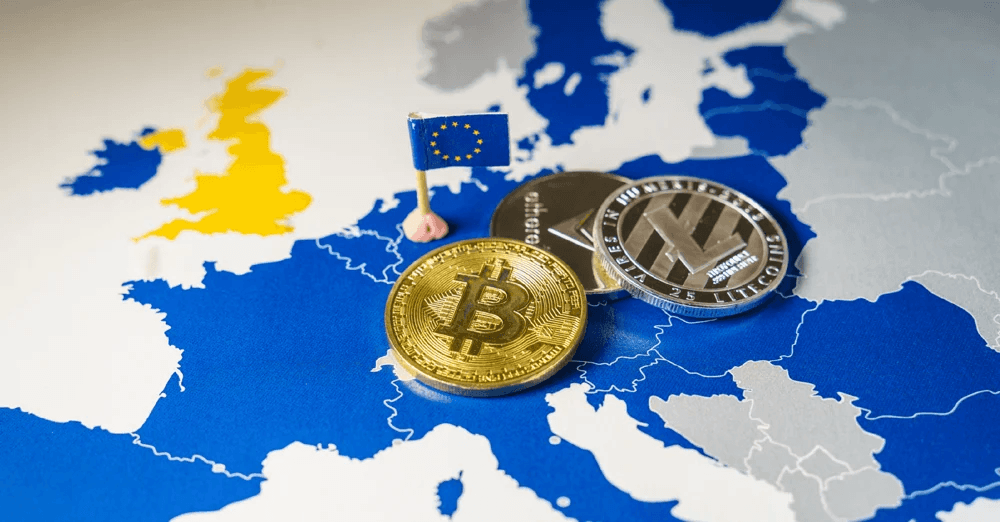
The EU’s Markets in Crypto-Assets (MiCA) regulation—finalised in 2023—swaps 27 separate national regimes for one pan-European rulebook. The upshot: if you run an exchange, wallet, broker or stablecoin that touches EU customers, MiCA will soon decide whether you operate—or exit—the bloc’s 450-million-person market.
The regulation arrives after a turbulent stretch for crypto: the Terra collapse, FTX’s implosion, and a litany of hacks put consumer protection on political front pages. Brussels responded with bank-style prudential rules, clear disclosure standards and anti-manipulation clauses. The quid pro quo? A single licence passports you across the EU, replacing the costly maze of local approvals.
MiCA in Plain English
MiCA is an EU regulation—not a directive—so its text applies verbatim in every member state on day one. The law targets two groups:
- Crypto-Asset Service Providers (CASPs) – exchanges, brokers, custodians, portfolio managers, advisers and anyone transmitting crypto on behalf of clients.
- Issuers – projects offering tokens to the public or listing them on trading platforms, with stablecoin issuers getting an extra layer of scrutiny.
Assets already regulated as securities, deposits or e-money are out. Purely unique NFTs and fully decentralised protocols remain mostly outside MiCA—at least in version 1.0. Everything else, from utility tokens to euro-backed stablecoins, is now squarely within Brussels’ sights.
Key Dates You Can’t Ignore
- 30 June 2024 ▶ Stablecoin (ART & EMT) rules take effect. Issuers must be licensed and fully reserved.
- 30 Dec 2024 ▶ CASP licensing, market-abuse and disclosure rules go live for exchanges, custodians & brokers.
- 1 July 2026 ▶ Sunset on national “AML registrations.” Every in-scope firm must hold a MiCA licence or leave the EU market.
ESMA and the EBA are building the technical standards now. Expect a flurry of Q&As and draft guidance through 2024—watch those updates like a hawk.
What’s In – What’s Out
- In: Bitcoin, Ether, utility tokens, exchange tokens, fractionalised NFTs that trade like securities, euro- and dollar-pegged stablecoins, multi-asset stablecoins.
- Out: Tokenised stocks and bonds (they stay under MiFID II), central-bank digital currencies, unique one-off NFTs, and software published only as open-source code with no intermediary.
Third-country firms remain caught if they market to EU users. The “reverse-solicitation” carve-out is razor-thin: unsolicited inbound interest only, no EU-targeted ads, no EU-language website.
CASP Licence: Five Things to Know
- Home-state regulator. Pick one EU country, apply once, passport everywhere.
- Capital buffer. €50k–€150k seated in equity (service-dependent) plus 25 % of last year’s overhead.
- Governance. Fit-and-proper managers, two-person management mind, and written policies for AML, IT security, conflicts and complaints.
- Custody hygiene. Client coins off-balance-sheet, robust key management, liability for loss unless force majeure.
- Conduct rules. Fair marketing, best-execution policies and a hard ban on insider dealing or wash trading.
Stablecoin Rulebook in 90 Seconds
- Licence first. Multi-asset tokens (ARTs) require a MiCA issuer licence. Single-currency tokens (EMTs) need an e-money licence or a banking charter.
- 1:1 reserves. Fully segregated, high-quality, mark-to-market assets; 30 % of EMT reserves must sit as bank deposits.
- Capital cushion. Extra own funds (≥ €350k or a percentage of the reserve) and recovery/wind-down playbooks filed with regulators.
- Redemptions. Token holders may cash out at par any business day; paying yield is forbidden.
- “Significant” status. Hit scale thresholds and the EBA steps in with quarterly stress tests and tighter liquidity rules.

AML & Data: No Place to Hide
MiCA folds neatly into the EU’s broader anti-money-laundering push. Every CASP becomes an AML-obliged entity. Couple that with the updated Transfer-of-Funds Regulation and you get:
- Travel Rule. Originator and beneficiary data must accompany every crypto transfer, regardless of amount.
- Dual oversight. Your “home” financial regulator checks capital and conduct; the AML authority (soon centralized at EU level) audits KYC and suspicious-activity reports.
- GDPR still rules. Personal data sent under the Travel Rule must be minimised, encrypted and kept no longer than AML laws demand.
MiCA Readiness Roadmap
| Quarter | Action Item |
|---|---|
| Q1 2024 | Gap-analysis sprint; appoint project owner; open dialogue with chosen regulator. |
| Q2 2024 | Raise any capital shortfall; draft AML, custody and complaints policies; kick off Travel-Rule tech build. |
| Q3 2024 | Submit CASP application; publish draft white-paper template if issuing tokens; launch staff training. |
| Q4 2024 | Answer regulator’s RFIs; user-interface tweaks for risk warnings; dry-run incident-response drill. |
| H1 2025 | Licence expected; go-live under MiCA; start monthly compliance KPIs (alert-clearance time, complaints log, capital buffer). |
Opportunity vs. Headache
Upside. One licence unlocks 27 markets; regulatory clarity attracts institutional capital; compliant stablecoins may dominate euro-payments.
Downside. Capital drag, high legal costs, and a real chance smaller projects fold or geofence EU users to avoid the burden.
Need vendor support? Explore the BeVerified KYB & compliance provider directory.
Comparison Table – MiCA vs. MiFID II, PSD2, AMLD
MiCA intersects with several existing EU regulatory frameworks. The table below provides a high-level comparison of MiCA against three key regimes: MiFID II (markets in financial instruments), PSD2 (payment services and e-money), and AMLD (anti-money laundering directives). This highlights how they differ in scope and requirements:
| Aspect | MiCA (Crypto-Assets Regulation) | MiFID II (Financial Instruments Directive) | PSD2 / E-Money (Payment Services) | AMLD (Anti-Money Laundering Directives) |
|---|---|---|---|---|
| Scope & Focus | Covers crypto-assets not already regulated by existing financial services law. Includes utility tokens, payment tokens, stablecoins (ARTs/EMTs). Aims at consumer protection and market integrity in crypto markets. | Covers financial instruments like stocks, bonds, derivatives, etc. (which crypto-assets are excluded from MiCA if they qualify as such. Focuses on investor protection and market transparency for traditional securities. | Covers payment service providers and electronic money issuers. Focus on secure and efficient payments, and consumer rights in payments. Stablecoins pegged to one currency (EMTs) fall under E-Money rules for licensing. | Covers all “obliged entities” (banks, payments firms, CASPs under AMLD5) to prevent money laundering and terrorist financing. Focus on KYC, record-keeping, and reporting suspicious activities. |
| Legal Form | EU Regulation – directly applicable uniform rules across all member states. | EU Directive – implemented via national laws (some local variation in rules/scope). | EU Directive (PSD2) and related E-Money Directive – implemented nationally. Provides framework for national licenses (e.g. payment institution license). | EU Directives (AMLD4/5/6) – implemented via national AML laws (though moving toward an EU AML Regulation by 2025). National Financial Intelligence Units enforce AML. |
| Main Regulated Entities | Crypto-Asset Service Providers (CASPs): exchanges, trading platforms, brokers, custodians, advisors, etc. Also issuers of crypto-assets (especially stablecoin issuers. | Investment firms (broker-dealers, portfolio managers), trading venues (stock exchanges, MTFs), and data reporting service providers. Also issuers of listed securities (for transparency rules). | Payment institutions (e.g. fintech payment providers), banks (when providing payment services), and Electronic Money Institutions (issuers of stored-value e-money). Also account aggregators (under PSD2). | All financial institutions and designated non-financial businesses (banks, casinos, real estate agents, and since AMLD5, crypto exchanges and wallet providers). Under AMLD5, CASPs are AML-obliged entities. |
| Licensing Requirement | Mandatory authorization for CASPs by an EU member state regulator to operate (with EU passport once licensed). Stablecoin issuers require additional authorization (or must be a licensed bank/EMI). | Investment firms must be authorized by national regulator (with EU passport). Trading venues require authorization. Approvals needed for offering securities to public (prospectus) etc. | Payment service providers must be licensed (unless an exemption applies). E-Money issuers need EMI license or banking license. EU passport applies for licensed entities across EU. | No separate license, but firms must register with/regulator or FIU for AML supervision. E.g., crypto exchanges had to register as “virtual asset service providers” under national AML laws. The upcoming AML Authority will oversee some cross-border entities. |
| Capital & Prudential Requirements | CASPs: Minimum capital €50k–€150k depending on service, plus additional own funds equal to 25% of fixed overheads. Stablecoin issuers: significant own funds and reserve assets requirements. | Investment firms: Capital requirements per EU Capital Requirements Regulation (typically ranging from €50k for advisers to €730k+ for dealers, plus risk-based capital). Investor compensation schemes to protect clients. | Payment institutions: Initial capital €20k–€125k (depending on services). E-Money Institutions: €350k initial capital. Ongoing capital tied to volume of payments (e.g., 2% of monthly transaction volume). Safeguarding of client funds (separate accounts or insurance) required. | Primarily procedural, not capital-oriented. (Banks have capital via banking regs, but AMLD itself doesn’t impose capital requirements on obliged entities; it mandates controls and training.) CASPs under AMLD didn’t have capital rules until MiCA introduced them. |
| Consumer Protection Measures | Mandatory white paper for public token offerings (with liability for misleading info). Fair communication and risk disclosure obligations for CASPs. Complaint handling process required. Custody asset segregation. No insider trading or manipulation (market integrity rules). | MiFID II has extensive investor protection: suitability assessments for advice, appropriateness for complex products, best execution of orders, client asset segregation, and access to ombudsman/complaint mechanisms. Transparency of charges and product info (e.g. Key Information Documents). | PSD2 emphasizes consumer rights in payments: strict authentication to prevent fraud, transparency of fees and exchange rates, refund rights for unauthorized transactions. E-Money holders have redemption rights at par value. Caps on liability for fraudulent use of payment instruments. | Customers benefit indirectly: AMLD requires KYC to prevent fraud/terror finance, but it’s not a customer-facing investor protection rule. However, by curbing illicit use, it protects the system. GDPR overlaps to protect customers’ personal data in financial services. |
| Supervisory Authorities | National competent authorities (e.g. financial regulators) license and supervise CASPs day-to-day. ESMA coordinates and can develop technical standards and guidelines. EBA has direct supervisory role for “significant” stablecoin issuers, including power to enforce stricter oversight. | National financial regulators (e.g. AMF, BaFin) supervise investment firms and markets. ESMA oversees convergence, maintains a single rulebook, and directly supervises some entities (e.g. credit rating agencies, some data reporting services). No direct ESMA supervision of banks/investment firms (except in limited Union priorities). | National regulators (often central banks or financial services authorities) license and supervise payment institutions and EMIs. The European Banking Authority (EBA) issues guidelines and technical standards (e.g. on strong customer authentication, incident reporting) and mediates between national authorities. | National authorities (financial intelligence units or AML supervisors) monitor compliance. The forthcoming EU AML Authority (expected around 2025-2026) will have direct supervision over certain cross-border financial institutions and harmonize AML supervision practices. Coordination via European supervisory authorities for consistency. |
Sources: MiCA Regulation (EU 2023/1114); MiFID II Directive 2014/65/EU and related regulations; PSD2 Directive (EU) 2015/2366 and E-Money Directive 2009/110/EC; AMLD4–6; White & Case analysis:contentReference
Three Fast Questions
Does MiCA apply to NFTs? Only if the tokens are sold in large, fungible series. One-of-a-kind art pieces stay outside—for now.
Reverse solicitation—is it a loophole? Hardly. If you run ads, translate the site to an EU language or actively court EU users, you’re in scope.
Can we wait until 2026? Only if you already operate under a national registration. Even then, regulators expect a filed MiCA application well before the deadline.
MiCA is Europe’s RSVP to crypto companies: “Bring capital, controls and clarity—or stay home.” Early movers tame the licensing slog, build trust with banking partners and step into a single, well-regulated market. Late movers risk scrambling for licences while their EU customer base drifts to the compliant competition. Your call.